
NUCCA Chiropractic Care
Life is full of accidents, big and small: slips and falls, lifting, sitting for too long, looking at your phone or computer screen, or even a motor vehicle accident. Each of these situations can throw your body out of balance and leave you in pain. When your spine is under stress or strain, the muscles around it respond by tightening. Your entire body becomes less stable and your spine will be locked in a stressed position.
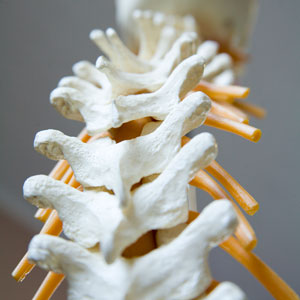 Every movement you make will then be imbalanced. This added form of stress can provide an array of symptoms that interfere with your ability to enjoy life. The many common issues we assist our patients with include:
- Headaches/Migraines
- Neck Pain
- TMJ Pain
- Concussions
- Dizziness
- Low Back Pain
- Sciatica
- Scoliosis
- Whiplash
- Imbalanced posture
The NUCCA Technique
The NUCCA technique is a very precise procedure to correct spinal imbalance based on mathematics, physics, and biomechanics. The first neck vertebra, also known as the atlas, or C1, is a small donut-like ring at the top of the spine. It is in close proximity to the brain stem, which is the part of the central nervous system that is responsible for controlling a number of vital body functions. One of these very important functions is the muscle balance of the spinal column. When the atlas is subjected to stress or injury, it can become partly misaligned in relation to the skull and the other vertebrae in the neck. We call this the Atlas Subluxation Complex Syndrome. Even a slight structural misalignment of the upper neck, will result in a muscular response that shifts the body balance away from normal and adds stress to the spinal column.
The NUCCA technique utilizes 3-dimensional measurements of your head and neck to provide a tailored and effective correction. To restore postural balance and reduce pain and dysfunction, very minimal force is required. “One of the things I hear more than anything else from patients is that they are shocked in how such a light and gentle treatment can be so effective.” Dr. Ryan notes. “They love to see the visual changes that occur almost immediately.” Each visit includes a postural assessment to determine if an adjustment is needed and to mark progress in the stabilization of the spine.
Signs that your Body is out of Alignment
Many health problems in our lives appear to pop up unexpectedly. Yet, disease often begins in our bodies before we’re aware of any symptoms. There are ways to detect and prevent disease long before it becomes a major symptomatic problem. One primary foundation for a healthy lifestyle is a healthy spine and nervous system. You may ask, “How can I tell if my spine is healthy?”
- Years of training and experience enable Dr. Ryan to detect misalignments of the spine. But there are some simple things you, yourself, can look for to help determine whether your spine is healthy or you need chiropractic care. These include:
- The soles of your shoes wear out unevenly. (Uneven leg length or stress along your spine causes uneven wear)
- Your jaw “clicks” or makes odd sounds. (Undue muscle stress related to neck misalignments can cause joints not to move as normal)
- You often feel the need to “crack” your neck or back. (Could be caused by areas of your spine that are locked or jammed)
- Your head, neck, back or hips do not turn or twist to either side equally or easily. (Can be due to an imbalanced spine and reduced range of motion)
- You experience unexplained fatigue. (An imbalanced spine drains your energy)
- One leg appears shorter than the other. (Spinal and nerve system imbalance often results in unequal leg length)
- You have poor posture. (Spinal imbalance often results in the head shifting forward or being tilted to one side, one shoulder being higher than the other, or a hip imbalance)
- You have headaches, backaches, sore or tender spots in your muscles or joints. (These are all common signs of spinal misalignment)
- You experience constant stress and tension in your muscles and joints, or you feel like you could use a daily massage. (Muscles are greatly affected by spinal misalignment)
- You have a history of injuries. (Misalignments of the spine can be a result of past injuries including auto accidents, falls, repetitive micro trauma or sports injuries from playing physical contact sports)
Frequently Asked Questions
What can I expect after my adjustment?
There are three possible effects that are demonstrated after an adjustment;
- Person feels no significant change.
- Person feels a change in symptoms with immediate improvement.
- Person experiences new short-term symptoms associated with functioning in a new structural position.
Long Answer: Responses to the adjustment vary from nothing, to muscle soreness, and from fatigue to a feeling of euphoria. Due to these individualized responses all patients are given a list of things they may experience so they are familiar with what responses are normal to expect. Due to the significant postural rebalancing that occurs with the upper cervical adjustment people will often feel stiff and sore for 2-4 days as the body adapts to its new position. This discomfort is usually associated only with the first and/or second adjustment.
Long Answer: How often you get adjusted is directly related to your body’s ability to maintain your alignment. You will be given recommendations throughout your period of care in the office which is intentioned to help you achieve and maintain an aligned state. Our goal is to adjust you as few times as possible, however quarterly to semi-annual assessments are usually recommended to assure that any progress isn’t lost along the way.
What can cause me to lose my alignment?
Long Answer: After your first adjustment in our office you will be given recommendations regarding daily activities to help maintain alignment. The three T’s (thoughts, traumas and toxins) are all contributors to maintaining or losing alignment. Thoughts include negativity or stress Ð think about the tightness in your shoulders after a long day at work. Have you ever considered what those muscles are connected to? Traumas are a more obvious cause, however doesn’t necessarily have to be a car accident or fall. Daily repetitive postures or movements can be considered an ongoing traumatic event. Toxins can be dietary or environmental and can also play a role in maintaining or losing alignment due to the stress they place on your body’s systems.
Long Answer: The healing process takes time. If you were to break an arm, the medical physician would cast it and you would be instructed to keep it in the cast for approximately six to eight weeks. That is because this is the typical healing time for bone. When dealing with spinal misalignment, the integrity of the musculature and ligaments has been compromised and you must allow adequate time for these structures to heal in the aligned position. The longer your spine has been out of alignment, the more possible damage has occurred and therefore the more required healing time.
Is it true that if you see a chiropractor once you have to go for the rest of your life?
Long Answer: There is a misconception that once one begins seeing a chiropractor, they need to see one for the rest of their life. A possibility for this perception may be due to the fact that the healing process requires time and multiple visits to the Chiropractor may be indicated to stabilize the spine until the body knows how to hold the spine in an aligned position on its own. The longer your spine has been breaking down (which is usually much earlier than the initial onset of symptoms), the longer it will typically take to attain a stabilized state.
If I feel relief, why do I need to come back?
Long Answer: Many feel significant relief in discomfort following the first few visits. Our goal is not just to provide relief but to create a situation where the spinal stresses that caused the issue are minimized, stabilized and you no longer need to be adjusted regularly. This level of care can involve significant work on your part. Although we can’t always achieve this status with a patient, it is this situation that provides optimal long-term benefit.
Symptoms are the last to show up and the first to leave (think of how cancer or heart attacks occur). A symptom-free state does not necessarily mean healing has completed or that you are in your optimal alignment. Once your body begins showing signs that it is stabilizing and holding alignment for an extended period of time, recommended time between visits will be lengthened.
Why should I get checked when I’m feeling fine?
Long Answer: Our assessment includes objective measures that are independent from subjective symptoms. It is best to be assessed periodically to ensure that if you are misaligned but non-symptomatic you can be adjusted to prevent your body from being accustomed to a misaligned state once again and avoid the spinal deterioration that often involves a return to pain.
Why are you looking at my feet if you are adjusting the top of my neck?
Long Answer: There are many postural muscles that are constantly contracting and relaxing in response to normal body movements to prevent us from falling over and allow us to maintain an upright posture. When our first vertebra is misaligned, the weight of the head is no longer evenly distributed over the neck and the rest of the body. The body therefore reflexively responds to this imbalance by contracting different postural muscles in its attempt to maintain an upright posture. It is the reflexive contractions of the postural muscles that result in the contracted/ shortened leg.
Is it possible for me to go in and out of alignment on my own?
Long Answer: Many times patients may feel that they were “out of alignment” and they were able to regain alignment on their own. A true subluxation can only be corrected by a third party. What the individual likely felt was the adaptation of the body to stress that they were able to manage without assistance. Our goal in this office is to maintain the body in a state of reduced stress so the body can adapt to the stresses and strains of everyday life without requiring assistance to manage a breakdown.
Why are so many things positively affected by one procedure?
Long Answer: By improving spinal alignment people experience improved posture as correction of non-adapting reflexive contracture of skeletal musculature is attained. This postural balance leads to better body-weight distribution which improves the position of internal organs and helps protect those structures acting to stabilize the spine. As less energy is required to oppose gravity, you will have more energy to think, function, heal and maintain yourself.
Dr. Ryan’s Approach
Dr. Ryan’s primary chiropractic technique in addressing patient’s concerns is NUCCA. He uses an Activator® for trigger point therapy and extremity adjusting. Lastly, he utilizes a gentle manual adjustment for other areas of concern such as the mid and low back if needed.
If you have a specific area of concern, ask Dr. Ryan what can be done about it. If he can’t help you, he can always point you in the direction of someone who can! We have a network of other practitioners that we work with including massage therapy, physiotherapy, acupuncture, dentistry, orthodontics, and more!
Find Out More Today
We’re pleased to offer no-cost, no-obligation consultations. Contact us today to schedule your time with Dr. Ryan at Precision Spinal Care! We offer direct billing and have ample free parking.
CONTACT US »
